9Apr, 2013

41+ Service Advisor Training Resource

Service-Advisor-Training

Chris Collins

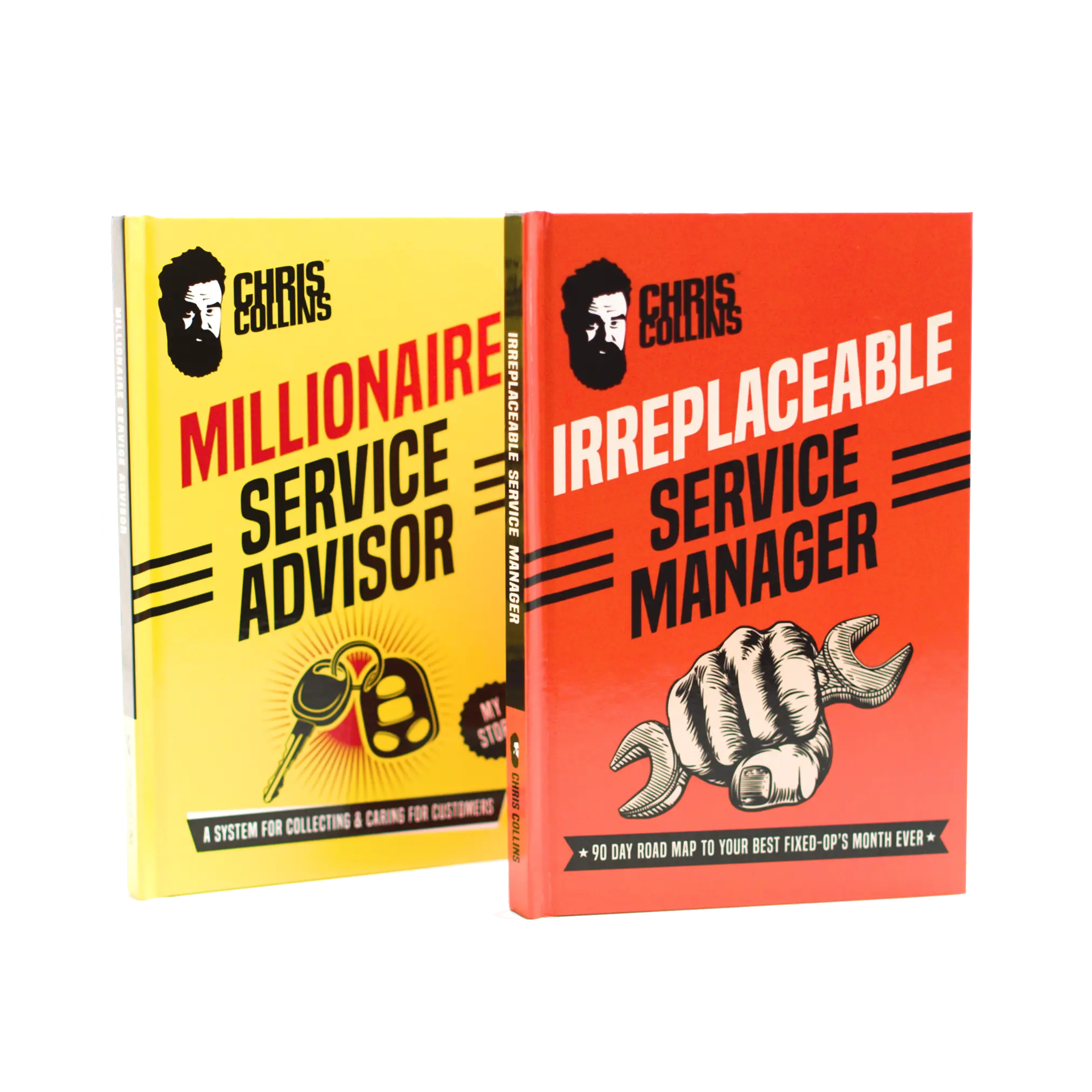
If you’re thinking of getting some service advisor training for your automotive service advisors, then the best training course to go to would be my Chris Collins VT . With over 18 years under my belt, I have built a rock solid reputation in the automotive business as an automotive consultant. In just 3 years, I had grown Crevier BMW to the eighth largest dealership in the US, a phenomenal growth of 300% from its previous place as 123rd.  Not bad, considering that I started in the business as just a car washer.

Before you dive in to this massive resource check out what the service managers tell about our service advisors training:


Another one is my Service Advisor Training: Table of Contents Technique:


Below is a comprehensive service advisor training resource:

1. Service Advisors: Smarter Than Your Average Bear - In Service Advisors: Smarter Than Your Average Bear, you’ll learn some great tips on how to be a great service advisor and beat the competition. As the camper in the story said, it’s not about outrunning the bear, it’s about outrunning the other guy.

2. The Dealership Consultant - With the economy still on its way up, most people would think twice about hiring a consultant. But in The Dealership Consultant, you’ll be convinced why it would be in your company’s best interest to do so. As stated in the article, ensuring a harmonious relationship between the manufacturer, the dealership consultant, the contractors, and the customers is a win-win situation for everyone.

3. Fixed Ops Consultant - Now that you have your automotive company up and running smoothly, do you think it’s time for you to relax believing that the profits will continue coming in? No.  Businesses that have been running for years have a tendency for complacency, a big NO when running a business. This is the time to bring in a Fixed Ops Consultant and ensure that processes are improved. As your business grows, so does your market, and processes that may have been applicable before may need to be modified to adjust to this growth.

4. Automotive Consultant at Work - Learn how an automotive consultant can become an invaluable help to your company. In Automotive Consultant at Work, know more about automotive consultants and how they can increase the profits in your business.

5. Service Department Training – Good customer service, this is the by-word of most service companies. But are you really giving “good” customer service? Learn the 9 questions that should be coming up in your service department training to ensure this.

6. Automotive Marketing Consultant - Marketing is an important aspect in any business. There are many ways to market your products and services, but which strategy is the best one? Can you really afford to try different marketing strategies before you hit on the best one suited for your company? You’re best bet would be to hire an automotive marketing consultant. Read the article to know more about the benefits of hiring one.

7. Automotive Product Consultants - Business doesn’t stop upon selling the car. Your next concern should be how to retain the customer. This is where automotive product consultants come in. These highly trained individuals focus on customer retention, among others. They are product experts and can give very good advice to customers to ensure their loyalty.

8. What Does An Automotive Sales Consultant Do? - Do you know those guys that welcome you with a big smile the moment you step in a car dealership? They are the automotive sales consultants. In the article What Does An Automotive Sales Consultant Do?, know more about these people and if you have what it takes to do this very challenging and lucrative job.

9.   Automotive Consultation Service - If you’re looking for a way to ensure your company’s success, then you should think seriously about getting an automotive consultation service. Automotive consulting is one sure way to fast-track your company’s growth.

Service Advisor Training  Top Dogs

10. Bulldog Marketing - Did you know that 68% of lost business in America is due to apathy? Don’t let your accounts be one of the  fatalities. Learn more about Bulldog Marketing in this article.

11. Tweaking Your Sales Strategy - Is your sales strategy a flop? Don’t start panicking. Read about the proper way of Tweaking Your Sales Strategy to ensure that you close that sale.

12.  The Art of Active Listening While You’re at Work - You have this great sales pitch which you’ve practiced over and over in front of the mirror. The customer comes and you start talking. After a few minutes, the customer shakes their head and heads out the door. What happened? Pitching is just part of closing the sale, the most important part is listening that what your customer really needs. Learn The Art of Active Listening While You’re at Work and worry no more about losing a sale.

13. The Top Seven Marketing Strategies of All Time - The competition over the market is always stiff. Learn The Top Seven Marketing Strategies of All Time and have an edge over all your competitors.

14. The Top 1% Precision Selling - Selling is a science and not based on luck. It’s a series of processes that when followed closely will ensure a closed sale. Know more about these processes in The Top 1% Precision Selling.

15. What’s Your Negotiation Style?In order to negotiate well, first you must know that different negotiation styles and how to use them to your advantage. Read What’s Your Negotiation Style? to know what’s yours as well as what the other party’s style is. This way you can adjust accordingly and achieve the best solution for everyone.

16. The Ultimate Competitive Advantage: Trust and Respect - Need a way to ensure that you stay ahead of the competition? Read The Ultimate Competitive Advantage: Trust and Respect and learn how to use these two qualities to ensure your business’ success.

17. Just a Little Bit Better - It’s a tough world out there, and everyday new companies are coming out to steal your customers. So how do you stay on top? Simple, by being Just a Little Bit Better. In this article, learn different ways to ensure that customers will come and stay with your company.

18.  Sales Driven or Purpose Driven – What Kind of Businessman Are You? - What is more important for your company – sales or customer service? In the article Sales Driven or Purpose Driven – What Kind of Businessman Are You?, these two terms are defined to help you choose what kind of organization your company will focus on.

19. Sales Driven or Purpose Driven – What Kind of Businessman Are You? - Sending advertisements through the mail is an age-old technique in automotive sales. But with the advent of the Internet, is this still effective? A study was made to answer this question. Know more in Fixed Ops Case Study (Direct Mail or Email).

20. Become a Chief Networking Officer - Do you know who is in charge of handling community-based activities and networking to bring in more customers and prospects? It’s the chief networking officer. Find out if you’re cut out to Become a Chief Networking Officer by reading the article.


Service Manager Training

Chris Collin’s Team


21. How to Generate More Testimonials - A testimonials databank coming from your satisfied clients could be a very important asset to your business. Learn how to do this in How to Generate More Testimonials.

22. Make Your Irresistible Offer - Want to close a sale? Then learn how to Make Your Irresistible Offer.

23. Different Customer Personalities and How to Deal with Them - A good sales consultant knows how to estimate a potential customer the moment they step through the door. Know who these people are in Different Customer Personalities and How to Deal with Them.

24.  Service Manager Liberation - Do you want to raise your labor rate? Learn how Chris Collins helped Joe raise theirs by $4 in Service Manager Liberation.

25.  Crazy Ways to Increase Your Service Department Sales This Year - Are you running out of ideas to lift your sales? Then read Crazy Ways to Increase Your Service Department Sales This Year and see your sales shoot up.

26. Social Media for Buyer Prospecting – A Risk or A Must? - Are you thinking of creating a page in Facebook for your automotive company? Then read Social Media for Buyer Prospecting – A Risk or A Must? and learn the pros and cons of going through this avenue.

27. 9 Ultimate Reasons You Can Be Successful - It may be the year 2013 already, but you can still get some valuable insights on how you can make this year a profitable one in 9 Ultimate Reasons You Can Be Successful.

28. Strategies that Sell - Know why an automotive technician sometimes sell more than a service advisor in Strategies that Sell.

29. Poison Words That Could Sabotage Your Sales - When making a pitch, you must be careful with the word you choose to avoid offending the customer. In this article, know the Poison Words That Could Sabotage Your Sales.

30. Top 5 Reasons Why Service Manager Fails - Do you want to be an effective service manager? Then read the Top 5 Reasons Why Service Manager Fails and avoid making the same mistakes.

31.  Auto Business Transformation Secrets Revealed - In these times, everything is changing fast – whether it’s technology, business models, and marketing practices. And as the manager, it is up to you ensure that your company rolls with these changes. In the article Auto Business Transformation Secrets Revealed, learn how to manage your company to keep up with these changes.

32. Where Do You See The Future of Automotive Fixed Operations Consulting Going - In Where Do You See The Future of Automotive Fixed Operations Consulting Going?, we see how having the latest technology isn’t always the answer. It’s still giving great customer experience.

33. The New Stuff for Service Managers and Service Advisors  by Chris Collins - Learn the importance of properly training your service managers and service advisors in The New Stuff for Service Managers and Service Advisors  by Chris Collins.

34. Service Manager Contest Winner – Meet Vicky, the Chris Collins $25,000 Service Manager Winner as they talk about the journey they had gone through to increase their sales.

35. 10 Things that Prove Why a Great Team is Always Better than a Great Idea - Do you have a great idea? Then it’s time for you to gather a great team together. Know why in 10 Things that Prove Why a Great Team is Always Better than a Great Idea.

36. Pet The Dog Instead Of Tired Old Walk Arounds - Watch this video Pet The Dog Instead Of Tired Old Walk Arounds! about Chris Collin’s famous story of petting the dog and how you can use it to boost your sales.


Other Useful Resources:

Other Service Managers Training Videos that you may want to see:

Service Advisor Training – Circle Of Trust


Automotive Marketing Consutants: Fixed Ops Case Study

Filed under Service Advisors Training by Admin

Permalink Print Comment
1Dec, 2011

My Top 17 Must Read Business Books of All Time

“I find television to be very educating. Every time somebody turns on the set, I go in the other room and read a book.” -Groucho Marx


It’s no secret that successful people read a ton of books, so I wasn’t surprised to read this interesting fact in an article on Bill Gates, written by copyrighting guru Dan Kennedy:

“[Bill Gates] has a photographic memory. He’s not a trained speed-reader but he speed reads. I asked him how many books he read on his vacation and he said 30. He writes up notes in the margins and sends them back to the author.”

There is an ocean of business books on the market and it is often hard to weed out the good ones from the junk, so being that I have likely read the majority of business books out there, I have compiled my list of the 17 best business books I have ever read.

Even if you have read these books, they are definitely worth re-reading and adding to your personal library.

More on My Top 17 Must Read Business Books of All Time

Filed under Auto News, Service Manager by Nina

Permalink Print Comment
21Mar, 2013

10 Things That Prove Why a Great Team is Always Better Than a Great Idea

Team vs ideas


Growing up, I used to think that if I had just one great idea I would become a huge success with tons of money to spend. There’s Bill Gates with Microsoft, Jerry Yang with Yahoo, and Mark Zuckerberg with Facebook. Why can’t I come up with my own unique idea and become people like them?

Life however has its own way of teaching its lessons. I’ve actually realized that ordinary people come up with ideas everyday of their lives. The sad thing is that most adults dismiss these ideas almost immediately after thinking of them.

You see, coming up with an idea is not that hard, even children have them. Coming up with a great idea would be much, much harder. But also not impossible. What you really need is a great imagination and the right team to bring the idea into reality.

Coming into contact with a lot of people, I’ve learned that in any endeavor one needs the right set of team to get it off the ground. It doesn’t matter if the idea is great or mediocre. It all depends on the people doing the execution. There are a number of reasons why a great team is always better than just having a great idea.

1. Ideas are just figments of our imagination unless we actually turn them into reality.

As I’ve mentioned before, anyone can come up with an idea, but not everyone can figure out a way to make it reality. For that, you need people with the proper knowledge and skills to work out the details. You need people working doggedly, sorting out the details and solving the seemingly endless problems that come with creating a new product or innovation.

2. More brains mean more ideas.

Everyone knows that the more people you put to work on something, the more inputs you’re going to get. It’s like the story of the blind men with the elephant. Each member of the team would be able to bring up an aspect of the idea that the other members wouldn’t have been able to think of.

3. Mediocre ideas can evolve into great ones with brilliant minds working on it.

When you have a great set of people working with you, any idea can become brilliant. These people are trained to think big and to think of profit. They’re passionate about their jobs and are always looking for new ways to make things better.

4. Great ideas can lose its greatness in the hands of imbeciles.

Sometimes in the course of events, your so-called brilliant idea can get lost in the hubbub of working out the details. Between figuring out the production budget and the marketing angle, you might suddenly find in your hand a product or service that is really not that different from another in the market. A good team never loses sight of its goal. It rarely compromises and is committed to bringing the idea into fruition.

5. A great team takes care of all the minor details.

From making the initial drawings up to the time when you’re launching your product, a great team is there to oversee that your idea doesn’t get stuck in one stage. They’re there to ensure that it goes on to the next phase of the production. Having all those details handled by only one person is tedious and dangerous. One never knows when an important detail might slip into the cracks, resulting in greater problems later on. It’s better to have one person in charge for each phase of the production. This way, every little detail is given proper attention.

6. Other hands are there to catch the ball.

When you have a great team working for you, things go more smoothly. Every member knows their place, what their targets are, and what their responsibilities are. Even better, you’re not the only one working on the project, so you’re not the only one keeping the balls in the air. You have time to work on the different aspects of the project, knowing that you’re not neglecting any part of it because someone else is there working on it. From there, you can easily step back and look at where you’re heading.

7. Having a great team brings a lot of intangibles to the table.

This may seem elementary, even almost always overlooked, but having a great team behind you can boost a flagging spirit faced with seemingly insurmountable obstacles. There’s nothing better than a team member bringing pizza at 3am in the morning when you’re stuck with a puzzle. Even better when that same team member points something that you had overlooked and which turned out to be necessary to solve the puzzle you’ve been working on for the past 5 hours.

8. A great team brings with it an invaluable resource of experiences.

Having a great team with you is not all about working out the details. It’s also about knowing the process. These people have also gone through similar experiences before, or at the very least have some experience that they can draw on to help make your idea into reality. They know when to keep dogging an idea and when to give up on it and change direction, they know how to work the media and the in and outs of the niche you’re targeting, they even know how to fill-out government forms which you had no idea you needed to fill.

9. Nothing beats good collaboration.

Everyone will tell you that one great advantage of having a team is collaboration. It can start with just passing the idea around until it gains form, up to the point where each member gives a feedback on the finished product, and a lot more in between. An innocent comment could be grasped by another team member and molded to become an important innovation on your product.

10. Investors usually bet on a successful team.

Let’s not forget the practical side of things. Your great idea can’t get off the ground without financial backing, and for this you need to find yourself an investor. A new entrepreneur with an amazing idea might get the attention of a potential investor, but an amazing idea backed by a proven set of team would always have better chances of gaining favor. Investors after all are there to earn money and would always rather bet on proven track records.

Don’t get me wrong. Having a great idea is important. It’s what you need to start the battle. If you’re a genius with a passion for work and a stubborn determination, you might just be able to make a go for it. But not everyone’s like that. Most of us are ordinary people trying to break through the market with our extraordinary idea. And one way to achieve this is to gather the talent that you need and turn these people into a team who would also dream of making your great idea a reality.

Filed under Consultancy by Admin

Permalink Print Comment
18Mar, 2013

5 Clever Ways to Know What Your Customer Wants

Finding What Customers Want


We always hear the expression “Customer is King,” but how true is this really? How often do businesses really take the time to find out what their customers want? And how much time do they spend finding out what their customers need? People say that the bottom line is the profit, but really, isn’t it the customers? Because if you have no customers, then there won’t be any profit.

Below are some clever tips to help you find out what your customers really want.

1. Use the tools available to you.

Technology is all around you. You use it every day. You just need to use it to your business’ advantage.

Take advantage of social media. Find out what your customers like, which pictures they see, which articles they read, and which videos they watch. Read the comments. Watch out for recurring wishes and complaints. Take note of the features they really find amazing. Granted you would have to be careful. There are a lot of spammers on these sites, so you need to learn to filter the information you get.

Get information from your own site. Check out the key words the customers use to find out what they’re really searching for. Find out from what sites they’ve been and which sites they went on to next. Putting a search box in your own site would also help you do that. Know what questions they’re asking.

Visit forums and create a blog. People want to know what other people think. It’s now easy to get reviews and opinions from the Internet. Most people would visit blogs and forums to find out about a particular product before buying it, so why shouldn’t you? They want to know if a product is effective, what side effects or defects it has, if it’s useful or a waste of money. From these, you can glean what works for your customers.

Revisit transactions. What age group are your patrons? What products did they buy together? How did they pay for it? You’d be surprised at what you’d learn about these combinations. What do diapers and beer have in common? Well, they’re both needed by new fathers opting to stay home instead of going to a bar. So maybe you can draw their attention to that La-Z-Boy at the corner of your store or that new car polish you’re promoting.

 2. Learn to listen and observe.

Most of the time, if you ask your customers what they think about your product they would give you one of two things – a generic answer giving you what they think you want to hear and which really doesn’t give you much information, or they would tell you what they honestly think at the time. Getting the first answer doesn’t really help you that much. On the other hand, getting the second answer can quite be tricky because half the time, customers don’t really know what they want. So what’s the best way to get the information you need? Eavesdrop.

Go to where people converge and talk about everything and anything. Go to your favorite coffee shop. Listen to people talking about their new toy or recent disaster. Go to department stores and supermarkets. Listen to what they request from sales clerks, or what they bemoan. Walk along street stalls. See which demonstrations get the people’s attention, which products are selling like hotcakes and which get ignored. But remember, go about it quietly. You’re there to get information, nothing else.

3. Step in their shoes.

Forget your bottom line for the moment and just be the customer. Forget deliveries, salary hikes, and revenues. If you were the customer what would you really want? How does your own product work for you? What would you like to see in it?

Stroll through your own shop or browse through your own site. Look at it from a customer’s point of view. If you were the customer, do you feel comfortable strolling through the shop? Was it easy to navigate through your site? Were there people eager to assist you? Were the clerks sincere in trying to help you out? Remember, customers like to feel they’re valued. If they do, they would give you an honest opinion. People like to talk about what they know, and if they’re comfortable with you then you can get some valuable information from them. They would talk to you about their own opinion, what their officemates think about your products and a story they heard from their cousin.

You should also adapt to their wavelength. Know their language. When they complain about wanting more volume from their shampoo, what are they really saying? When they say it’s okay, what does okay really mean? Use their own language to talk to them. Certain groups have their own lingo. Learn this and get their groove as they say.

4. Broaden your horizons.

One problem that most entrepreneurs encounter is that they often get stuck up over their own product. It’s time to get out of the office and smell the flowers. Or in your case, check out the competition. Go to their website. What do their customers want from them? How are they attracting customers? What aspect of their products do the customers like? What do they hate?

Not just the competition, you should also check out other industries. What tricks are they employing? How did they solve a particular problem? What innovation have they done recently? You never know what nugget of wisdom you might get from surveying your surroundings.

You should also head to the bookstore. What are the people reading? What are the topics on the magazines? Magazines and newspapers are popular for a reason. They reflect the people’s views and what they want. Browse through them. What’s the fashion for this season? What movies are they watching? What apps are they downloading on their phone?

 5. Get it straight from the horse’s mouth.

Since you want to know what your customers want, it would be best to get it straight from them. However, you need to be clever about this. You need to know what questions to ask and how to go about asking them.

Start a blog. Tweet. Create a Facebook page. Talk about the things that would interest your customers. As your followers grow, you would get more and more responses. And you need to be proactive. Don’t just blast out sales and openings. Respond. Give your opinion. Make recommendations. You don’t even have to limit the conversations to your product. Create a relationship with your customers. When the customers start to believe you really care about their needs, then they would become more open about what they want.

Talk with the front liners in your business. These are the people who have firsthand experience with the customers. Get your sales clerks in a meeting. Better yet, talk to them during coffee break or during a team building session. Conduct a focus group discussion with your customer service group. What are the common complaints? What features are the customers looking for? What are the questions they’re asking? What questions did your people have difficulty answering?

Go back to the basics. Conduct surveys at least once a year. Put a suggestion box in your store or a comments section on your page. Feed them the standard question for customer satisfaction. Ask a colleague’s opinion over cocktails. Discuss the merits of a product with a fellow churchgoer during a fund raiser.

There are many ways to find out what our customers really want. You just have to be clever about it.

Filed under Consultancy by Admin

Permalink Print Comment

Digging for Profits By Chris Collins - Dealer Service Training Specialist

Linkedin VT Login